

The Uncertain Good
Breaking out of the culture of certitude to recover a path to peace

“Precious little good it will do for scientists to declare that they do not possess the universal panacea, and that they know perfectly well the limits of scientific knowledge. The fact remains: science’s unshakable successes, and its symbiosis with modern technology, have persuaded the people that ‘outside science is no salvation.’ And indeed, unless you have a career in science, there is little to ‘eat’ today in the First World and its satellites. If the fundamental thing for humanity is knowing, and if this becomes (except for the elementary necessities of life) the specialty of a few, then we are implanting in the human heart one of the causes of a lack of peace.” – Raimon Pannikar
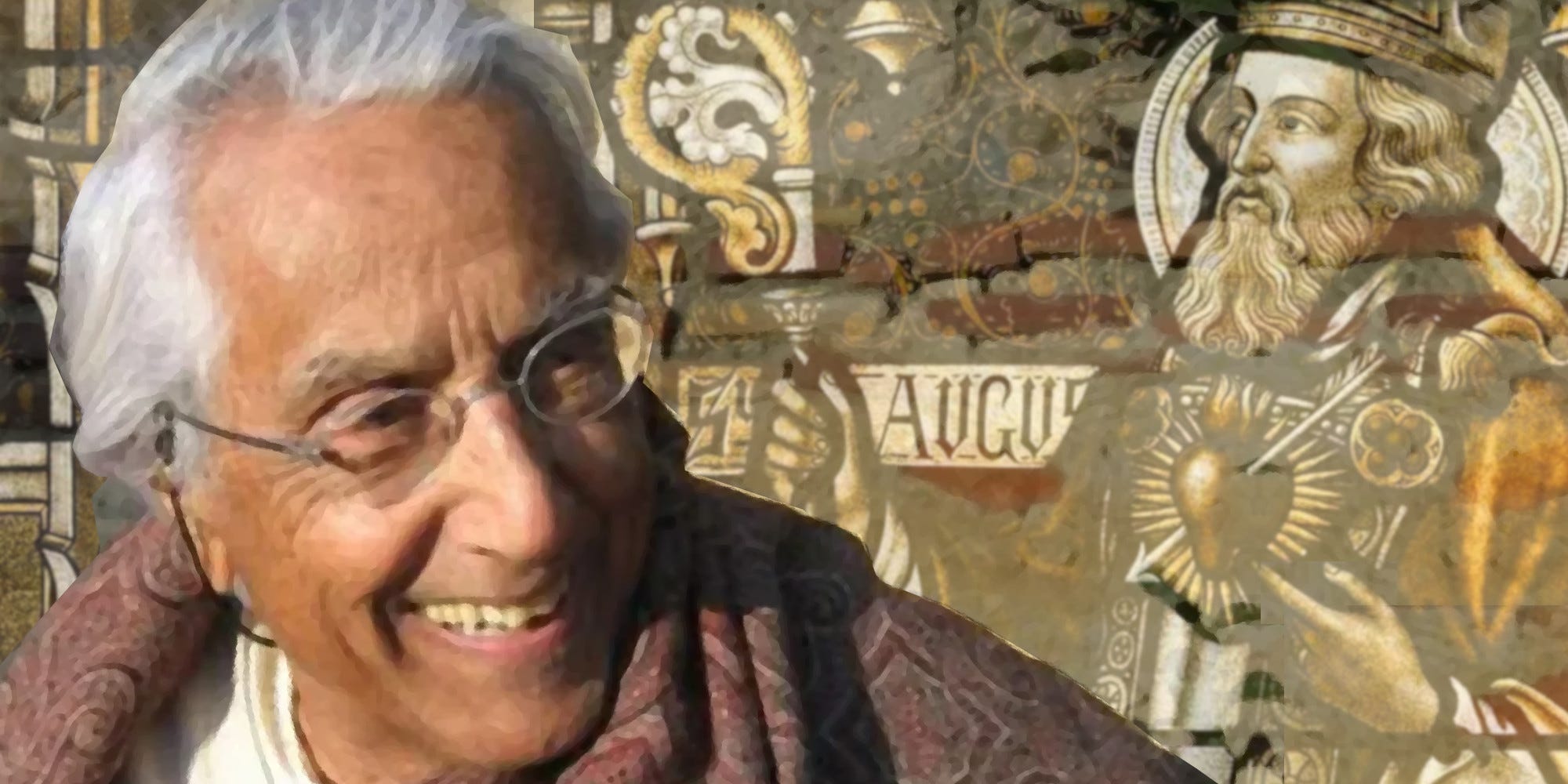
Our elevation of expertise into elitism is linked by Raimon Pannikar to the philosophical legacy of René Descartes, which he calls “the culture of certitude”. Pannikar further suggests that the logical consequence of this is a “civilization of security”, which has become our prevailing ideology – and this from an author writing in 1992! How much more have we seen this in the three decades since. Yet he challenges this obsession with safety by suggesting that while uncertainty and insecurity are intolerable for human reason, this is something that perhaps might even be experienced pleasantly, if it can be pursued in love.
Pannikar draws against Saint Augustine’s name for peace, ‘the uncertain good’, and contends that if we place our trust in the powerful to protect us, we will run into impossible contradictions. After all, he says (invoking the famous Latin phrasing): ‘Who will watch the watchers?’ Against this, he suggests that we must place our trust in reality, which means placing trust in ourselves. This is a revolutionary proposition, yet it is also surely one which the civil rights campaigners of the twentieth century understood, but that we have since lost. As long as we are counting on an elite few to provide security and certainty for us, peace is rendered pragmatically unobtainable. Rather, we must be willing to undertake the call to peace ourselves.
Drawing once again from Hindu wisdom, Pannikar talks of what is required to “shatter the law of karma”, which is to say, the cycle of violence. And in this, he maintains that forgiveness, reconciliation, and ongoing dialogue are a requirement to break through and open a path to peace. More than this, he makes it one of his central propositions that only reconciliation leads to peace. And here, he is keen to stress that the very etymology of this word requires the convocation of others – which is to say, to speak with them, to open a dialogue, which “is a science as well as an art”. In a striking metaphor of how difficult it is to accept cultural disarmament and open discussion, Pannikar writes: “Humanity has known since prehistoric times that it is more painful to extract an arrow than to drive it deeper. If the social body is wounded by many arrows, there is nothing to be done but withdraw them. And that is no easy task.”
The desire for peace must be, and can only be, the desire for dialogue – which requires us to accept something most of us find unthinkable: that those we must reconcile with might have something to teach us. We are so certain that we are right. Thus, when others cannot accept what we insist we know with certainty, any hope of dialogue is removed from possibility. It is thus in our own hearts that the path to peace must be opened. In concluding his vibrant reflection on peace, Pannikar rewrites the famous words of Flavius Vegetius Renatus (‘Would you have peace? Prepare for war’). Against this, Pannikar counters: “Would you have peace? Prepare yourself.”
Culture Disarmament: The Way to Peace is published by Westminster John Knox Press, ISBN 9780664255497.