

The Monstrous Idol
The neurobiology of blasphemy and Joseph Campbell's 'monster idol'

“It all comes from misreading metaphors... To which the only generally recognized correction as yet proposed has been the no less wrongheaded one of dismissing the metaphors as lies (which indeed they are, when so construed), thus scrapping the whole dictionary of the language of the soul (this is a metaphor) by which mankind has been elevated to interests beyond procreation, economics, and ‘the greatest good of the greatest number’.”
– Joseph Campbell
Language and myth are the intertwined roots nourishing the human experience. Beneath this surges those instinctive ways of living we share with the other animals, and upon this is built the great achievements of humanity – art, religion, and the sciences. The point of separation is not rationality, as Aristotle supposed, but metaphor, the power of representing with symbols. We are the most imaginative animals, but as with all great powers the gift of symbolic thought carries terrible risks.
One such peril is that we cannot bear contradictory symbols. Between the outer cortex and the ancient limbic system lies a mediating layer, the anterior cingulate (sin-gyu-late) cortex, a ‘conflict monitor’ that keeps the peace between the rational organisation of our symbols and our emotional responses to them. Our amygdala (uh-mig-duh-luh) assigns importance by ‘tagging’ certain memories when they evoke strong emotions. Anger, fear, disgust, excitement, happiness... whenever our emotional being is aroused, the associated sensory patterns are tagged as important.
Thus, amongst our store of words and their myths, certain symbols become raised in significance. If we encounter anything incompatible with our most intensely felt metaphors, we are thrown into cognitive dissonance. Our mind casts about for ways to resolve the contradiction, either by ignoring the conflicting symbol, or by adopting new beliefs – to rationalise the disconnect, or to demonise those representing it. In the sphere of religion we have a name for this kind of cognitive dissonance: blasphemy. But because the mythic undercurrent of language lies beneath all human activity, blasphemy can also be triggered from art or the sciences. The invocation of ‘pseudoscience’ or ‘not art!’ is cognitively indistinguishable from cries of blasphemy.
Joseph Campbell’s life’s work was charting our mythologies, and like Ernst Cassirer he understood that metaphor is “the language of myth”. He discussed two ways this goes awry, both involving taking symbols literally. On the one hand, you could mistake myths as lies rather than metaphors, forgetting that logic and reason are entirely dependent upon these myth-laden symbols. On the other, you might treat myths as literal truth and turn them into idols. It is no coincidence that so many religions caution against idolatry, either by literally forbidding ‘graven images’ or by figuratively warning against them (for example, the Hindu Vedas say ‘there is no likeness of the divine’). For Campbell, the imperious theist and the arrogant atheist were two sides of the same idolatrous coin.
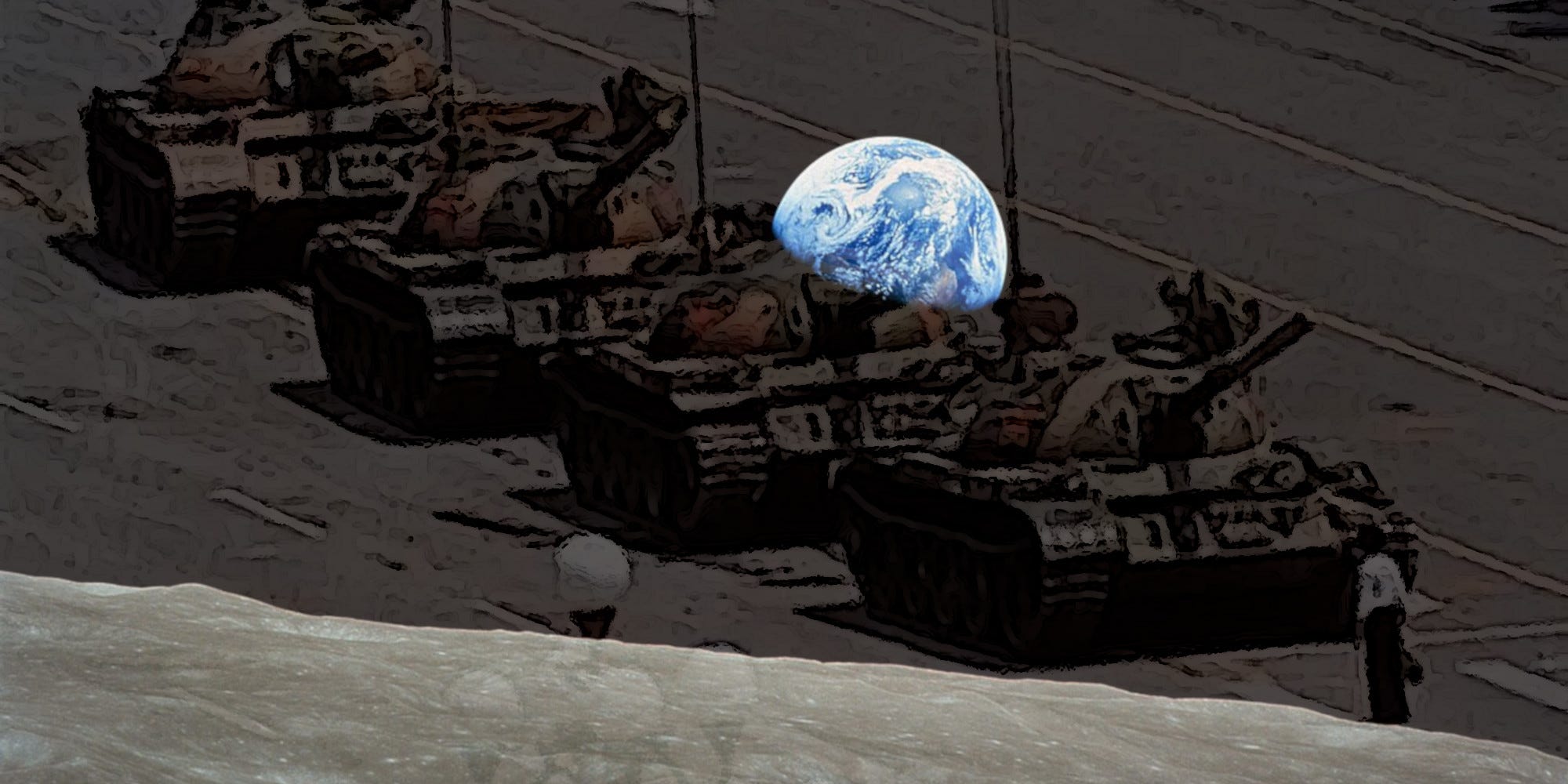
Yet disagreements over religious symbols are not the heart of our contemporary crisis. Campbell understood that a terrible inversion of values had been unleashed: rather than society being in the service of people, people were being put into the service of society. He called this “the monster idol”, that is, the nation state “with its scientific brainwash and its awesome, gruesome mass product”, the “doll of living flesh moved not from within but by remote control and signal from without”. For Campbell as with Cassirer, political idols were the greatest threat of the twentieth century. He wrote that “the curse of politics, mass politics, so-called democratic politics” was that it reduced life, art, and religion to “politics, the marketplace, newspaper thinking.” For us in the century that followed, the danger is all the greater, since social media has made blasphemy its business model.
Campbell hoped the path out of this disaster would come from new symbols, new mythic imagery. His wish was that the famous 1968 ‘Earthrise’ photograph – the Earth seen rising over the moon – would empower the creation of a new mythology, one capable of undermining the monster idol of the state by showing all humanity as united by this planet that we all share. How little he anticipated the dark path taken instead, that which elevated the perils of the state to the scale of the global! The most monstrous idol of all has been unleashed upon us. Now, dark battle rages between a multitude of idolatrous states and the nightmarish planetary mass society that censors blasphemy everywhere under the unyielding banner of its own stifling mythology.
I appreciate Joseph Campbell, but I’ve met many intellectuals who dismissed him I think largely for the very reason you’re discussing here that they took his claims as literal instead of metaphorical.
Stimulating essay....
I asked ChatGPT Deep Research: "Does the human mind organize ideas as a collection of metaphors" After 30 minutes it came back to me with
"Does the Mind Organize Ideas as a Collection of Metaphors? A Cross-Disciplinary Assessment"
https://chatgpt.com/s/t_698b9011d8388191ae47177ddbbdf958
Gemini on the other hand I asked "Is an ISM a metaphor" which at first it took to mean 1) "Interstellar Medium" and 2) "When "ISM" Becomes Metaphorical" and explained the difference between Metonymy vs. Metaphor.
I then asked the same question: "Does the human mind organize ideas as a collection of metaphors"
so I clarified and here is the dialoque
https://gemini.google.com/share/46576de58f55