

Legitimate Scientific Practices
How to defend both the legitimacy of scientific investigations and the distinctness of other forms of knowledge

“What is at stake is not a matter of truth or falsity but the emergence, the establishing, of a standard. Actual results, as we are fond of saying, may vary...” - Babette Babich
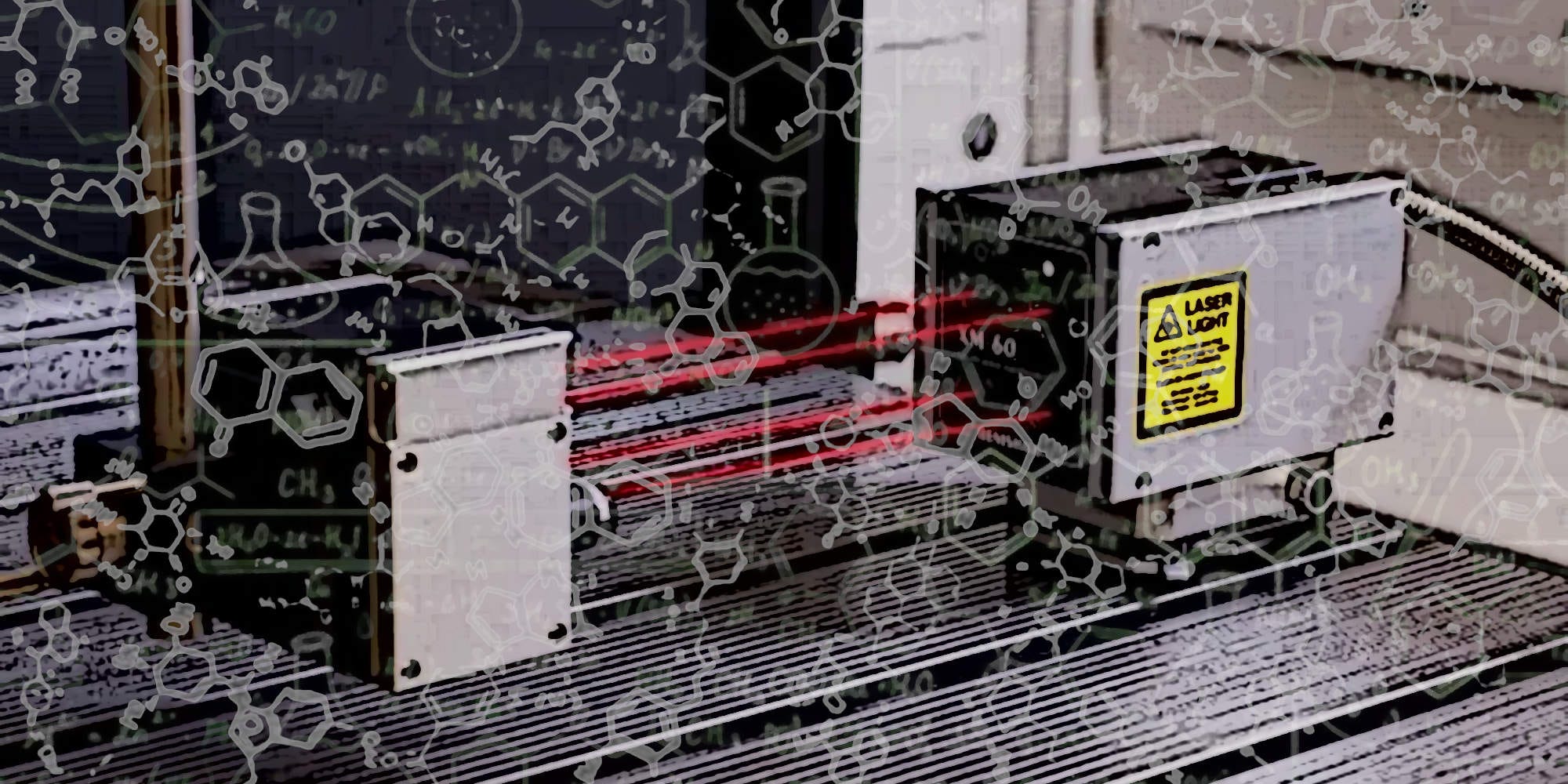
We want to defend our intuitive impression of the sciences as truth-seeking, and also (in some nebulous sense) successful at seeking the truth. How do we do it? The approach I proposed in Wikipedia Knows Nothing is to switch our focus from facts (true statements) to practices (skills and equipment). To know how to use something – a polymerase chain reaction, an interferometer, a fractional distillation column – is more a matter of knowing what to do than it is a ‘book of facts’, even though that knowledge also produces facts related to the equipment used (and any theories deployed to provide context to the instrumental readings).
An astronomer armed with geometric theorems can use an interferometer to measure the diameter of stars, while an engineer can use an interferometer and the wave theories of light to measure very small objects precisely. The practices associated with the equipment (the interferometer) and the theories associated with each specific usage give rise to facts – in this case, distances. The difference lies in what legitimises the activity in question. On the usual conception of knowledge, you have legitimate knowledge if you assert statements that are true and, additionally, your reasons justifying them were correct. But this approach provides no means of knowing what is or isn’t legitimate, since that criteria requires an appeal to something beyond the situation (the truth) that we cannot access directly.
When we view knowledge instead as a practice what makes facts legitimate is that we are using the tools correctly. We then have recourse to everyone with the relevant knowledge of those tools to verify the legitimacy of the practices used, and hence the facts reported. On this understanding of knowledge (unlike an appeal to the truth) we can construct a viable understanding of ‘scientific truth’. Certain equipment, certain theories can be uncontroversially attributed to the sciences, and their correct usage can be judged by anyone with the relevant knowledge practices. On this path we can distinguish between assertions of scientific truth (facts emerging from legitimate research practices) and errors – provided we allow any disagreements to be properly explored within any given research community.
However, as Babette Babich warned, this cannot happen if we rush in with a dogmatic cry of ‘pseudoscience’! Every attempt to discredit something this way entails an outright refusal to think about a given topic at all. Ironically, such attempts to discredit effectively cause an outbreak of what I have called ‘the condition of pseudoscience’ (a state of disrupted discourse that prevents scientific research). Whomsoever speaks this word with the intent to discredit and ignore will signal the very breakdown of legitimate scientific disagreement required to understand whatever is (not) being discussed.
The deeper problem we encounter when we look clearly at how scientists discover or verify truths is that their claims swiftly exceed simple assertions of facts. We require another set of knowledge practices to disentangle the relationships between facts and conclusions – and these aren’t strictly scientific at all, for all that scientists engage (unknowingly) in these kind of interpretative practices all the time. Precisely the crisis of the contemporary sciences is that their application is not a scientific practice, but a philosophical one. Regrettably, Einstein’s generation may have been the last where scientists spanned these disciplines rather than retreating behind narrow specializations.
Small wonder that people say we have arrived in a ‘post-truth’ world: the attempt to make the only acceptable truths those that flow from scientific endeavours renders a great many of the truths that matter impossible to adequately discuss. The important truths – those that pertain to what we ought to do, for instance – could never be scientific and thus cannot be established solely by an appeal to the facts. Yet we keep looking to scientists to establish a certainty that is not in any way available through scientific methods. As the L’Aquila trial in Italy demonstrated, we will even turn upon those who do not live up to our insanely unrealistic expectations and accuse them of committing crimes when they (inevitably) make mistakes. But it is we that have failed, by falling for such an impoverished understanding of the complexity of scientific research as that offered by magical science.
Next week: Breaking the Spell of Magical Science